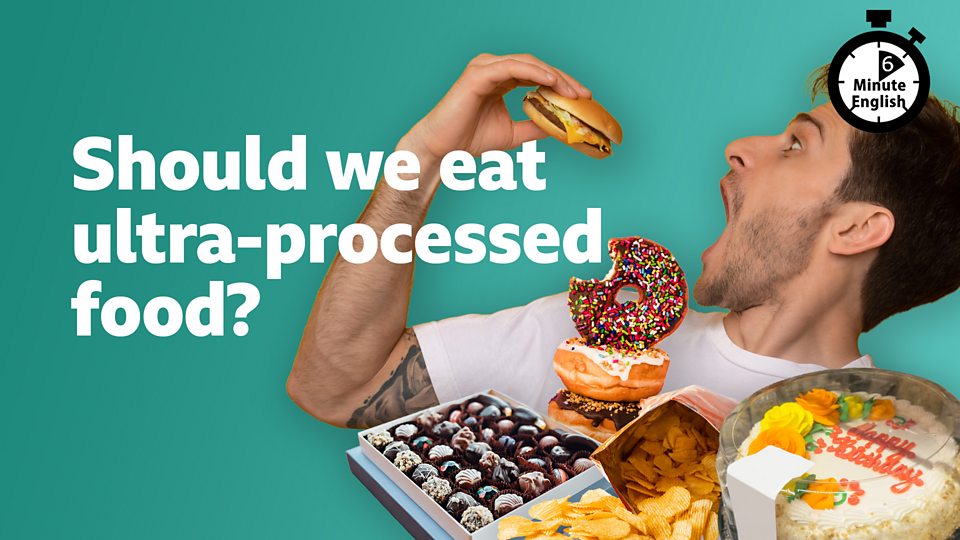
What is your ultra-processed guilty pleasure? Many of us love home-cooked food, but when we're in a rush, it's often more convenient to eat snacks, or to buy quick, easy meals from the supermarket which we simply have to heat up. These are often ultra-processed forms of food, which recent studies have linked to poor health. Phil and Pippa discuss this and teach you some new vocabulary.
무엇이 당신의 켕기는 고도 가공 식품입니까? 대부분의 우리들은 가정에서 요리한 음식을 대단히 좋아합니다. 그러나 우리가 아주 바쁠 때에 간단한 식사를 먹거나 또는 [우리가 간단히 데워야만 하는] 빠르고 간단한 식사를 슈퍼마켓에서 사 먹는 것이 종종 보다 편리합니다. 이것들은 종종 고도로 가공된 유형의 식품입니다. 그런데 최근의 연구는 그것을 좋지 못한 건강과 관련시킵니다. 필과 Pippa가 이것을 논의하고 당신에게 몇몇 새로운 어휘를 가르쳐 줍니다.
이 자료는 BBC 러닝잉글리시 코너의 6분영어가 매주 재공하는 스크립트를 직역한 것입니다. 이번 주 스크립트의 주제는 'Should we eat ultra-processed food?' 입니다.
해석은 철저하게 직역하였습니다. 관계사절 등의 절이나 긴 부정사, 동명사구, 삽입구 등은 이해를 위해 []를 사용해 묶었습니다. 이 글의 목적은 번역이 아니라 원문을 영어적으로 이해하는 것이기 때문입니다.
[본문] [01] Hello.
[직역] 안녕(하세요) .
[본문] [02] This is 6 Minute English from BBC Learning English.
[직역] 여기는 BBC 학습 영어의 6분 영어입니다.
[본문] [03] I'm Phil.
[직역] 나는 필입니다.
[본문] [04] And I'm Pippa.
[직역] 그리고 나는 피파입니다.
[본문] [05] If you've eaten anything today, then it's likely that some of your food was ultra-processed - food containing artificial ingredients like additives and sweeteners.
[직역] 만약 당신이 오늘 무언가를 먹었다면, 그러면 [몇몇의 당신 음식은 첨가물과 감미료와 같은 인공적인 식자재를 포함하고 있는 극도로 가공된 식품일] 가능성이 있습니다.
[본문] [06] Ultra-processed foods are everywhere, from sliced bread to chocolate biscuits and crisps.
[직역] 고도 가공 식품은 슬라이스빵에서부터 초콜릿 비스킷과 감자칩까지 어디든지 있습니다.
[본문] [07] They might taste good, but the bad news is that ultra-processed foods have been linked to poor health.
[직역] 그것들은 맛이 괜찮을 수도 있습니다. 그러나 나쁜 뉴스는 [고도 가공 식품은 좋지 못한 건강과 관련되어 왔다] 라는 것입니다.
[본문] [08] They often contain lots of sugar and salt and have been linked to problems like obesity and diabetes.
They often contain lots of sugar and salt and {they) have been linked to problems like obesity and diabetes.
[직역] 그것들은 종종 설탕과 많은 소금을 포함하고 있고 (그래서) 비만과 당뇨병과 같은 골칫거리와 관련되어 왔습니다.
[본문] [09] So, how can we tell what food is ultra-processed and what's not?
[직역] 그래서 우리는 [어떤 음식이 고도 가공되고] [무엇이 아닌지]를 어떻게 말할 수 있습니까?
[본문] [10] Here's health reporter Annabel Rackham on BBC World Service programme What in the World?
[직역] 여기에 비비씨 월드 서비스 프로그램 What in the world에 속한 건강 리포터 Annabel Rackham이 있습니다?
[본문] [11] Ultra-processed foods are things that contain five or more ingredients, and things that you wouldn't find in your average kitchen.
[직역] 고도 가공 식품은 [다섯 개 이상의 식자재가 포함되어 있는] 것이고 그리고 [당신이 당신의 일반적인 부엌에서 찾을 수 없는] 것입니다.
[본문] [12] It's going to have things on there, like emulsifiers, preservatives, additives, dyes and sweeteners.
[직역] 그것은 거기에 유화제 방부제 첨가물 염료 그리고 감미료와 같은 것들을 더해서 갖게 될 것입니다.
[본문] [13] Annabel describes ultra-processed foods as things containing ingredients you wouldn't find in your kitchen.
Annabel describes ultra-processed foods as things containing ingredients {which/that} you wouldn't find in your kitchen.
[직역] Annabel은 [당신이 당신의 부엌에서는 찾아볼 수도 없는] 식자재를 포함하고 있는 것으로 고도 가공 식품을 서술합니다.
[본문] [14] Do you eat much ultra-processed food, Pippa, or do you try to avoid it?
[직역] Pippa 당신은 고도 가공 식품을 많이 먹습니까? 아니면 당신은 그것을 피하려고 노력합니까?
[본문] [15] I used to eat a lot of ultra-processed foods, and now I try to cook everything myself and not eat things like chocolate and snacks all day.
[직역] 나는 많은 고도 가공 식품을 먹곤 했습니다. 그리고 이제 나는 나 스스로 모든 것을 요리하고 그리고 하루 종일 초콜릿과 스낵과 같은 것들을 먹지 않으려고 노력합니다.
[본문] [16] How about you?
[직역] 당신은 어때요?
[본문] [17] I think the same.
[직역] 나는 같다고 생각합니다.
[본문] [18] I try to cook things using just normal ingredients, just so you know what's gone into it.
[직역] 나는 단지 보통의 식자재를 사용하여 어떤 거를 요리하려고 노력합니다. 단지 그래서 당신은 [무엇이 그것에 들어가는 것인지]를 압니다.
[본문] [19] In this episode, we'll be discussing ultra-processed food as well as learning some useful new vocabulary.
[직역] 이 에피소드에서 우리는 몇몇 쓸모있는 새로운 낱말들을 배우는 것에 더하여 고도 가공 식품을 논의할 것입니다.
[본문] [20] And remember, there's also a quiz and worksheet available on our website, bbclearningenglish.com.
[직역] 그리고 기억하십시오. 우리의 웹사이트인 bbclearningenglish com에 가져다 쓸 수 있는 퀴즈와 워크시트가 있습니다.
[본문] [21] But now I have a question for you, Pippa.
[직역] 그러나 Pippa, 이제 나는 당신에게 질문이 있습니다.
[본문] [22] Fizzy drinks, like cola and lemonade, are another example of popular ultra-processed foods, but when were fizzy drinks invented?
[직역] 콜라나 레모네이드와 같은 탄산 음료는 인기 있는 고도 가공 식품의 또 하나의 보기입니다. 그런데 탄산 음료는 언제 발명되었습니까?
[본문] [23] Was it:
[직역] 이것이었습니다.
[본문] [24] a) 1772, b) 1872, or c) 1972?
[직역] ⒜ 1772, ⒝ 1872, 아니면 ⒞ 1972?
[본문] [25] Well, I think it was before 1972, but 1772 sounds like too early, so I'm going to say b) 1872.
[직역] 그래요 내 생각에 그것은 1972년 이전입니다. 그런데 1772년은 너무 이른 것처럼 보입니다. 그래서 나는 1872년으로 말하겠습니다.
[본문] [26] We'll find out the answer at the end of the programme.
[직역] 우리는 이 프로그램의 말미에서 답을 알아볼 것입니다.
[본문] [27] One reason for the popularity of ultra-processed food is convenience.
[직역] 고도 가공 식품의 인기에 대한 어느 한 이유는 편리함입니다.
[본문] [28] Let's hear more from health reporter Annabel, who talks here with Hannah Gelbart, presenter of BBC World Service's What in the World.
[직역] 건강 리포터 Annabel에게 좀더 들어 봅시다 그런데 그는 여기에서 비비씨 월드 서비스 What in the world의 진행자인 Hannah Gelbart와 함께 말합니다.
[본문] [29] So, I do think convenience - it is the main issue there.
[직역] 그래서 나는 편리함을 정말로 생각합니다. 그것이 거기에서 주된 주제입니다.
[본문] [30] And again, with a ready meal, you put it in the microwave for a couple of minutes.
[직역] 그리고 다시 즉석 식품으로 당신은 그것을 몇 분 동안 전자레인지에 둡니다.
[본문] [31] It's done.
[직역] 되었습니다.
[본문] [32] It's hot.
[직역] 뜨겁습니다.
[본문] [33] It serves you.
[직역] 그것이 당신에게 제공됩니다.
[본문] [34] Whereas, you know, sometimes cooking a fresh meal from scratch - that can take a really long time.
[직역] 그런데 있잖아요, 때때로 새로운 끼니를 맨 처음부터 요리하는 것, 그것은 진짜로 긴 시간이 듭니다.
[본문] [35] What's your ultra-processed guilty food?
[직역] 당신의 켕기는 고도 가공 식품은 무엇입니까?
[본문] [36] I'm a chocolate girl.
[직역] 나는 초콜릿을 좋아하는 여자입니다.
[본문] [37] A packet of biscuits - something like that.
[직역] 비스킷 꾸러미, 그와 같은 것.
[본문] [38] A cake.
[직역] 케익.
[본문] [39] That is my... that's my guilty pleasure.
[직역] 그것이 나의, 그것이 나의 켕기는 즐길 거리입니다.
[본문] [40] Ultra-processed foods like ready meals are convenient.
[직역] 즉석 식품과 같은 고도 가공 식품 과(와) 같은 편리합니다.
[본문] [41] A ready meal is a meal from a supermarket that has already been prepared and can be heated up quickly in a microwave.
[직역] 즉석 식품은 [미리 준비되어 있고] [전자레인지에서 빠르게 데워질 수 있는] 슈퍼마켓에서 사는 식사입니다.
[본문] [42] That's a lot quicker and easier than cooking from scratch - an idiom meaning to do something from the very beginning without using anything that's already been made.
[직역] 그것은 맨 처음부터 요리하는 것 보다 아주 빠르고 쉽습니다. (즉, from scratch는) 〈[미리 만들어져 있는] 어떤 것을 사용하지 않고 맨 처음부터 무언가를 하는 것〉이라는 의미의 관용구(입니다).
[본문] [43] Even though ultra-processed foods are often unhealthy, they taste good.
[직역] 비록 고도 가공 식품이 종종 건강하지 못하더라도 그것들은 맛이 좋습니다.
[본문] [44] That's why Annabel calls chocolate her guilty pleasure.
[직역] 그것이 [Annabel아 초콜릿을 그녀의 켕기는 즐길 거리라고 부르는] 이유입니다.
[본문] [45] A guilty pleasure is something you enjoy but think you shouldn't and feel a little embarrassed about.
[직역] guilty pleasure는 [당신이 즐기지만] 그러나 [[당신이 그래서는 안된다고] 생각하고 그냥 약간 당황스럽게 느끼는] 무언가입니다.
[본문] [46] Ultra-processed food is a tricky topic.
[직역] 고도 가공 식품은 어려운 주제입니다.
[본문] [47] We know these foods have been linked to poor health, but at the same time they're cheap, convenient and taste good.
We know {that} these foods have been linked to poor health, but at the same time they're cheap, convenient and taste good.
[직역] 우리는 [이러한 음식이 형편없는 건강과 관련이 되어 왔다] (라고) 압니다. 그러나 동시에 그것들은 값싸고 편리하고 그리고 맛이 좋습니다.
[본문] [48] So, what should we do?
[직역] 그래서 우리는 무엇을 해야 합니까?
[본문] [49] Here's Hannah and Annabel discussing this for BBC programme What in the World:
[직역] 여기에 비비씨 프로그램 What in the world에서 이것을 논의하는 Hannah와 Annabel가 있습니다.
[본문] [50] Is it OK for me to have a packet of crisps once in a while?
[직역] [내가 한 봉지의 감자칩을 이따금 갖는 것]은 오케이입니까?
[본문] [51] Should we be cutting ultra-processed foods out of our diets completely, or is there a way for us to still enjoy them from time to time?
[직역] 우리는 우리의 식단에서 고도 가공 식품을 완전히 잘라내야만 합니까? 아니면 우리가 그것들을 가끔 즐길 방법이 아직 있습니까?
[본문] [52] I think the best thing to do is just not to panic.
I think {that} the best thing to do is just not to panic.
[직역] 내 생각에 해야 할 최선의 것은 단지 패닉에 빠지지 않는 것입니다.
[본문] [53] Everything is fine in moderation.
[직역] 모든 것은 적당하면 괜찮습니다.
[본문] [54] Hannah asks if it's OK to eat ultra-processed foods once in a while, or from time to time.
[직역] Hannah는 [고도 가공 식품을 이따금(once in a while) 또는 때때로(from time to time) 먹는 것이 오케이인지]를 물었습니다.
[본문] [55] The phrases once in a while and from time to time mean occasionally - sometimes, but not very often.
[직역] 'once in a while'과 'from time to time' 구는 occasionally(가끔)이라는 의미입니다. 즉 그것은 sometimes(때때로)라는 뜻이지만 'very often'은 아닙니다.
[본문] [56] Annabel replies using the phrase everything in moderation, which advises us that it's best to avoid too much of anything.
[직역] Annabel은 everything in moderation(무엇이든 적당히)이라는 구를 사용하여 대답합니다. 그런데 그것은 우리에게 [〈무엇이든 너무 과도한 것을 피하는 것〉이 최선이다] 라는 것을 조언합니다.
[본문] [57] That sounds sensible to me, and it also means I won't feel bad about eating chocolate now and then.
That sounds sensible to me, and it also means {that} I won't feel bad about eating chocolate now and then.
[직역] 그것은 나에게 합리적인 것 같습니다. 그리고 그것은 또한 [나는 때때로 초콜릿을 먹는 것에 관해 나쁘다고 느끼지 않을 것이다] 라는 의미입니다.
[본문] [58] OK.
[직역] 오케이.
[본문] [59] Pippa, it's time to reveal the answer to my question.
[직역] Pippa, 나의 질문에 대한 답을 밝혀야 할 시간입니다.
[본문] [60] Now, I asked you when fizzy drinks were invented.
Now, I asked {that} you when fizzy drinks were invented.
[직역] 이제 나는 당신에게 [언제 탄산 음료가 발명되었는지]를 묻었습니다.
[본문] [61] You said 1872.
[직역] 당신은 1872년이라고 말했습니다.
[본문] [62] I'm afraid the correct answer was 1772.
[직역] 나는 [맞는 답변은 1772년이다] 라고 염려합니다.
[본문] [63] Apparently carbonated water was used to try to prevent scurvy on sea voyages.
[직역] 듣자 하니 소다수는 항해 중에 괴혈병을 막기 위해 노력하는 데 이용되었습니다.
[본문] [64] Wow, that is amazing.
[직역] 와우, 그것은 놀랍습니다.
[본문] [65] I wouldn't have thought it was that long ago.
I wouldn't have thought {that} it was that long ago.
[직역] 나는 [그것이 그렇게 먼 옛날이었다] (라는 것을) 생각해 본적이 없었습니다.
[본문] [66] Right.
[직역] 알았어요.
[본문] [67] Let's recap the vocabulary we've learned, starting with ready meal - a meal from a supermarket that has already been prepared so you can heat it up quickly.
[직역] ready meal(즉석 식품)으로 시작하면서, 우리가 배운 적이 있는 낱말들을 살펴봅시다. (즉, ready meal은) [당신이 그것을 빠르게 데울 수 있도록] 미리 준비되어 있는 슈퍼마켓에서 파든 식사(입니다).
[본문] [68] If you do something from scratch, you do it from the very beginning, without using anything that's already been made.
[직역] 만약 당신이 무언가를 맨 처음부터(from scratch) 하면, [이미 만들어진] 아무것을 사용하지 않고 당신은 그것을 처음부터(from the beginning) 합니다.
[본문] [69] A guilty pleasure is something you enjoy but feel guilty or embarrassed about because you think you shouldn't do it.
A guilty pleasure is something {which/that} you enjoy but feel guilty or embarrassed about because you think you shouldn't do it.
[직역] guilty pleasure(켕기는 즐길 거리)는 [당신이 즐기지만] 그러나 [당신이 [당신이 그것을 먹지 않아야만 한다]고 생각하기 때문에,] [죄의식이나 쑥스러움을 느끼는] 무언가입니다.
[본문] [70] The phrases once in a while and from time to time mean occasionally, not very often.
[직역] 'once in a while(이따금)'과 from time to time(가끔)'이라는 구는 occasionally(가끔) '아주 자주는 아니다' 라는 의미입니다.
[본문] [71] And finally, the phrase everything in moderation is used to advise someone that it's best to avoid too much of anything.
[직역] 그리고 마지막으로 'everything in moderation'이란 구는 [아무것의 너무 많은 것을 피하는 것이 최선이다] 라는 것을 누군가에게 권고하는 데 이용합니다.
[본문] [72] Once again, our six minutes are up, but if you're hungry for more, head over to our website, bbclearningenglish.com, for more tasty topics and useful vocabulary.
[직역] 한 번 더 우리의 6분 영어가 끝났습니다. 그러나 만약 당신이 좀더 배고프면 좀더 맛있는 주제와 도움이 되는 어휘를 얻기 위해 우리의 웹사이트인 bbclearningenglishcom으로 향하십시오.
[본문] [73] See you again soon.
[직역] 곧 다시 뵙겠습니다.
[본문] [74] But for now, it's goodbye.
[직역] 그러나 지금은 안녕입니다.
[본문] [75] What is your ultra-processed guilty pleasure?
[직역] 무엇이 당신의 켕기는 고도 가공 식품입니까?
[본문] [76] Many of us love home-cooked food, but when we're in a rush, it's often more convenient to eat snacks, or to buy quick, easy meals from the supermarket which we simply have to heat up.
[직역] 대부분의 우리들은 가정에서 요리한 음식을 대단히 좋아합니다. 그러나 우리가 아주 바쁠 때에 간단한 식사를 먹거나 또는 [우리가 간단히 데워야만 하는] 빠르고 간단한 식사를 슈퍼마켓에서 사 먹는 것이 종종 보다 편리합니다.
[본문] [77] These are often ultra-processed forms of food, which recent studies have linked to poor health.
[직역] 이것들은 종종 고도로 가공된 유형의 식품입니다. 그런데 최근의 연구는 그것을 좋지 못한 건강과 관련시킵니다.
[본문] [78] Phil and Pippa discuss this and teach you some new vocabulary.
[직역] 필과 Pippa가 이것을 논의하고 당신에게 몇몇 새로운 어휘를 가르쳐 줍니다.
pdf 파일은 이곳을 클릭하세요.
https://softca.tistory.com/3611을 클릭하세요.
이 블로그에는 [BBC 6분 영어와 관련하여 매주 다음과 같은 글들이 게시 됩니다
- 단어공부(금주 대본에 나온 주요 어휘) https://softca.tistory.com/3612
- 멀티단어공부(금주 대본에 사용된 멀티단어(구동사, 숙어) 간단 정리) https://softca.tistory.com/3613
- 독해공부(금주 대본의 문장별 해석(직역) 자료) 이 글입니다
- 문장별 문법공부(문장별 문법 설명) 이 글의 포스팅 시점에는 아직 작성되지 않았습니다.
- 금주의 어휘(금주 대본에 나온 금주의 어휘를 집중적으로 정리한 자료) 이 글의 포스팅 시점에는 아직 작성되지 않았습니다.
- 항목별 문법공부(금주 대본에 나온 문법을 주제별/항목별로 정리한 자료) 이 글의 포스팅 시점에는 아직 작성되지 않았습니다.
- 금주의 구동사(금주 대본에 사용된 구동사 상세 정리) 이 글의 포스팅 시점에는 아직 작성되지 않았습니다.
- 금주의 PDF(금주의 PDF 및 기타 다운로드 파일) https://softca.tistory.com/3611

아래의 이미지를 클릭하시면 PDF로 된 대본(Script)를 다운받을 수 있습니다.
[영어 문장 공부] 자료를 처음 보시는 분은 아래의 링크를 클릭하셔서 「공부법」을 먼저 보시기를 권장 드립니다.
[영어문장공부] 학습법 보기


