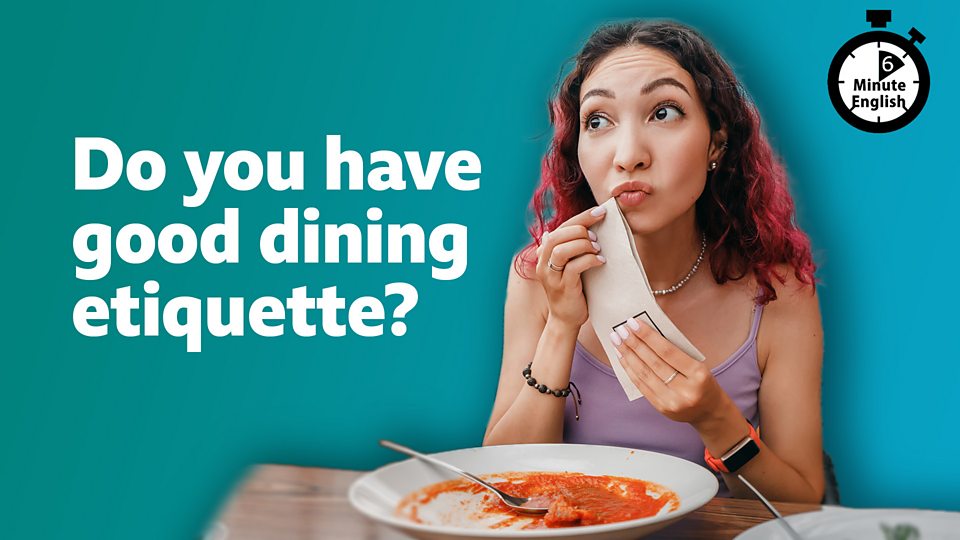
당신은 식사 중에 행동하는 적절한 방법을 아십니까? 그리고 무엇이 [누군가기 [먹는 동안] 할 수도 있는] 가장 나쁜 것입니까? 이 에피소드는 예의의 대부분에 관한 것입니다. 무엇이 좋은 식사 예절을 만들까요? 그리고 무엇이 무례하다고 여겨질까요? 필과 Pippa가 이것을 논의하고 당신에게 몇몇 새로운 어휘를 가르쳐 줍니다.

Do you know the 'proper' way to behave during meals? And what would be the worst thing someone could do while eating? This episode is all about etiquette, what makes good table manners and what is considered rude! Phil and Pippa discuss this and teach you some new vocabulary.
이 자료는 BBC 러닝잉글리시 코너의 6분영어가 매주 재공하는 스크립트를 직역한 것입니다. 이번 주 스크립트의 주제는 'Do you have good dining etiquette?' 입니다.
해석은 철저하게 직역하였습니다. 관계사절 등의 절이나 긴 부정사, 동명사구, 삽입구 등은 이해를 위해 []를 사용해 묶었습니다. 이 글의 목적은 번역이 아니라 원문을 영어적으로 이해하는 것이기 때문입니다.
[본문] [01] Hello, this is 6 Minute English from BBC Learning English.
[직역] 안녕(하세요) 여기는 BBC 학습 영어의 6분 영어입니다.
[본문] [02] I'm Phil.
[직역] 나는 필입니다
[본문] [03] And I'm Pippa.
[직역] 그리고 나는 피파입니다
[본문] [04] In this episode, we're discussing etiquette - the rules about what makes polite behaviour - and in particular the dos and don'ts about what you should and shouldn't do when eating.
[직역] 이 에피소드에서 우리는 에티켓을 논의할 것입니다. (즉, 그것은) [공손하게 행동하는 것]에 관한 규칙과 그리고 특히 당신이 〈밥먹을 때〉 해야 하거나 하지 말아야 할 것에 관해 따라야 할 규칙들입니다.
[본문] [05] So, Phil, what's the worst thing someone can do while eating, in your opinion?
So, Phil, what's the worst thing {which/that} someone can do while eating, in your opinion?
[직역] 그래서 필, [당신의 생각에 누군가가 밥 먹는 동안에 할 수 있는] 가장 나쁜 것은 무엇입니까?
[본문] [06] For me, it's being very noisy when you do it.
[직역] 내 경우에 그것은 [누군가가 그것을 할 때,] 아주 시끄러운 것입니다.
[본문] [07] I can't stand it.
[직역] 나는 그것을 참을 수 없습니다.
[본문] [08] Mmm.
[직역] 음.
[본문] [09] OK.
[직역] 오케이
[본문] [10] I don't have too many rules about eating, but I was always told growing up that you shouldn't have your elbows on the table and I never really understood why, but I always remember that one.
[직역] 나는 밥 먹는 것에 관해 그렇게 많은 규칙을 갖지 않습니다. 그러나 나는 자라면서 [너는 너의 팔꿈치를 식탁 위에 올려 놓으면 안된다] 라는 것을 항상 들었습니다. 그리고 나는 결코 그 이유를 진짜로 이해하지 못합니다. 그러나 나는 항상 그것을 기억합니다.
[본문] [11] So, we'll be hearing more about mealtime manners from some college students and an expert on British etiquette.
[직역] 그래서 우리는 식사 예절에 관해 좀더 몇몇의 대학생과 그리고 영국의 에티켓에 관한 전문가로부터 들을 것입니다.
[본문] [12] And, as usual, we'll be learning some useful new words and phrases, all of which you can find on our website, bbclearningenglish.com.
[직역] 그리고 늘 그렇듯이 우리들은 몇몇의 쓸모있는 새로운 단어와 구들을 배울 것입니다. 그것들 모두를 당신은 우리의 웹사이트인 bbclearningenglish com에서 찾을 수 있습니다
[본문] [13] But first, I have a question for you, Pippa.
[직역] 그러나 Pippa, 먼저 나는 당신에게 질문이 있습니다.
[본문] [14] Ideas about polite behaviour change a lot from country to country, so when BBC programme The Food Chain asked listeners from around the world about eating manners in their country, what do you think was the most common complaint?
[직역] 예의 바른 행동에 관한 견해는 나라마다 많이 달라집니다. 그래서 비비씨 프로그램 더후드체인이 전 세계로부터 청취자들에게 그들 나라의 식사 예절에 관하여 물었는데요, 가장 흔한 불만이 무엇이라고 당신은 생각합니까?
[본문] [15] Was it:
[직역] 이것이었습니다.
[본문] [16] a) people eating with their hands, b) people eating noisily, or c) people burping at the table?
[직역] ⒜ 사람들이 손으로 먹는 것, ⒝ 시끄럽게 먹는 것, 아니면 ⒞ 식탁에서 트림하는 것?
[본문] [17] Hmm.
[직역] 흠
[본문] [18] I don't think it's people eating with their hands, because lots of people around the world do that as, kind of, their normal way of eating, but maybe it's b) people eating noisily, I think.
I don't think {that} it's people eating with their hands, because lots of people around the world do that as, kind of, their normal way of eating, but maybe it's b) people eating noisily, I think.
[직역] 나는 [그것은 사람들이 그들의 손으로 먹다] 라는 것이라고 생각하지 않습니다. 왜냐하면 세계적으로 많은 사람들이 어느 정도 그들의 정상적인 먹는 방법으로 그렇게 합니다. 그러나 아마 그것은 [사람들이 요란하게 먹는 것이다] (라고) 나는 생각합니다.
[본문] [19] Like you mentioned, Phil, that's quite annoying.
[직역] 당신이 언급한 것처럼 필 그것은 아주 짜증나게 합니다.
[본문] [20] Well, we'll find out the answer later in the programme.
[직역] 그래요 우리는 이후에 답을 이 프로그램 내에서 찾을 것입니다
[본문] [21] The Food Chain also interviewed students at London's City of Westminster College about family dinnertimes.
[직역] 더후드체인은 또한 가족 저녁 식사 시간에 관해 런던 시의 Westminster 대학에 있는 대학생들을 인터뷰를 했습니다.
[본문] [22] Samuel is 19 and from Sierra Leone, and Aya is 18 and British but her family are from Iraq.
[직역] Samuel은 19살이고 시에라리온에서 왔습니다. 그리고 Aya는 18살이고 영국 출신입니다. 그러나 그녀의 가족은 Iraq에서 왔습니다.
[본문] [23] Let's listen as they chat with BBC World Service's The Food Chain:
[직역] 그들이 비비씨 월드 서비스 더후드체인과 이야기를 나누는 것을 들어봅시다
[본문] [24] Yeah, I would say first impressions really do matter because it also is really important how you portray yourself - how you present yourself to the person.
[직역] 그래요, 나는 [첫인상이 실제로 문제가 된다] 라고 말할 수 있습니다. 왜냐하면 또한 [당신이 당신 자신을 보여주는 방식] 즉, [진짜로 당신이 당신 자신을 그 사람에게 보여 주는 방식]이 중요하기 때문입니다.
[본문] [25] What I don't want to see is any loud chewing, or with your mouth open, please and thank you!
[직역] [내가 보고 싶지 않는 것]은 또는 입을 열고 어떤 큰 소리로 씹는 것입니다. 제발요. 그러면 감사하겠습니다.
[본문] [26] I would like to see though eye contact, having a conversation, using your cutlery.
[직역] 나는 그럼에도 나이프와 포크를 사용하고 대화를 하면서 아이 콘택트를 하고 싶을 거 같습니다.
[본문] [27] Sometimes - and I know this could be, like, picky for everyone else - but having a tissue or napkin on your lap just in case you spill anything.
[직역] 때때로 그리고 나는 [이것이 있잖아요, 다른 사람 모두에게 까다로울 수 있다] (라는 것을) 압니다. 그러나 당신이 무엇을 흘릴 경우를 대비하여 당신의 무릎 위에 화장지나 냅킨을 갖는 것(이 좋겠습니다)
[본문] [28] The students think etiquette is important.
The students think {that} etiquette is important.
[직역] 학생들은 [에티켓이 중요하다] (라고) 생각합니다.
[본문] [29] Samuel says it's about making a good first impression.
Samuel says {that} it's about making a good first impression.
[직역] Samuel은 [그것이 좋은 첫인상을 만드는 것에 관련이 있다] 라고 말합니다.
[본문] [30] Your first impression is the opinion you form about someone when you meet them for the first time.
Your first impression is the opinion {which/that} you form about someone when you meet them for the first time.
[직역] 당신의 첫인상은 [[당신이 그들을 처음으로 만날 때] 당신이 누군가에 관하여 만든] 생각입니다
[본문] [31] For Aya, eating with your mouth open is definitely rude.
[직역] Aya에게 당신의 입을 벌린 채 먹는 것은 틀림없이 무례합니다.
[본문] [32] She also thinks people should use a napkin, although that could be seen as picky.
She also thinks {that} people should use a napkin, although that could be seen as picky.
[직역] 그녀는 또한 사람들은 냅킨을 사용해야 한다 라고 생각합니다. 비록 그것이 까다로워 보일 수도 있지만 말입니다.
[본문] [33] Picky here means being too strict about the rules.
[직역] 여기서 Picky는 〈원칙에 너무 엄격한 것〉이라는 의미입니다
[본문] [34] For this group of students, showing respect and appreciation for the meal is very important, and this idea is common across most, if not all, cultures throughout history.
[직역] 이들 그룹의 대학생들에게 〈식사에서 존중과 감사를 보여 주는 것〉은 아주 중요합니다. 그리고 이러한 생각은 다 그런 건 아니지만, 역사를 통틀어 대부분의 문화를 가로질러 보통입니다.
[본문] [35] So, imagine a scene from a TV show like Game of Thrones: two enemy forces have stopped fighting, made peace and now gather for a meal.
[직역] 그래서 왕좌의 게임과 같은 티브이 프로그램의 장면을 상상해 보십시오 두 명의 적군이 교전을 멈추고 평화를 만들었습니다. 그리고 이제 식사하러 모입니다
[본문] [36] The leaders clink glasses, meaning they lift up and touch drinks, and make a toast - they hold up a glass of alcohol and drink it to show respect.
The leaders clink glasses, meaning {mean} they lift up and touch drinks, and make a toast - they hold up a glass of alcohol and drink it to show respect.
[직역] 지도자들은 [그들이 술잔을 들어 올려 마주치고 건배한다] 라는 의미인 'clink glasses'를 합니다. 그들은 존중을 보여 주려고 한 잔의 술을 들어 올려 그것을 마십니다.
[본문] [37] Now, keep that image in mind because we're going to hear British etiquette coach Rupert Wesson explaining why people clink glasses.
[직역] 이제 그러한 이미지를 마음에 담아두십시오. 왜냐하면 우리는 영국의 에티켓 코치인 Rupert Wesson가 사람들이 술잔을 부딪치는 이유를 설명하는 것을 들을 것이기 때문입니다.
[본문] [38] Here he is, talking to Ruth Alexander, presenter of BBC World Service programme The Food Chain:
[직역] 여기에 그가 비비씨 월드 서비스 프로그램 더후드체인의 진행자인 루스 알렉산더에게 말을 걸면서 있습니다
[본문] [39] Perhaps the simplest example is, "Why do we clink glasses when we have a toast?"
[직역] 아마도 가장 단순한 사례는 "왜 우리는 우리가 건배할 때 'clink glasses'를 할까요?" 입니다.
[본문] [40] If you clink glasses, you're slopping a bit of your drink into his cup and he's slopping a bit of drink into your cup.
[직역] 만약 당신이 'clink glasses' 하면, 당신은 작은 량의 당신의 술이 그의 잔 속으로 흘러 가게 하고 그리고 그는 적은 량의 술을 당신의 잔 속으로 흘러 가게 합니다.
[본문] [41] And therefore, by having that toast you are showing: "Look I trust you. You trust me."
[직역] 그리고 그러므로 건배를 함으로서 당신은 "보십시오. 나는 당신을 신뢰하고 당신은 나를 신뢰합니다" 라는 것을 보여 주고 있습니다
[본문] [42] And that's why we do it.
[직역] 그리고 그것이 [우리가 그것을 하는 이유]입니다.
[본문] [43] If you've poisoned my drink that's now slopped into your cup, you won't drink it.
[직역] 만약 당신이 나의 술에 독을 탔으면, 그것은 이제 당신의 잔 안으로 흘러내려 가는데 당신은 그것을 마시지는 않을 것입니다.
[본문] [44] Correct.
[직역] 맞는 말입니다.
[본문] [45] Hats at the table - we're hearing from BBC World Service listeners that that is a no-no.
[직역] 식탁에서 모자를 쓰는 것. 우리는 비비씨 월드 서비스 청취자로부터 그것이 no-no 이다 라는 것을 들을 것입니다.
[본문] [46] Is that right?
[직역] 그것이 맞나요?
[본문] [47] It's not something I would do.
It's not something {which/that} I would do.
[직역] 그것은 [내가 할 수도 있는] 중요한 일이 아닙니다.
[본문] [48] In fact, I would not be wearing a hat inside anyway.
[직역] 사실 나는 어쨌든 안에서는 모자를 쓰고 있지 않을 것입니다.
[본문] [49] So, Phil, when we clink glasses in a toast, some of my drink might spill into your glass and some of your drink might spill into mine.
[직역] 그래서 필, 우리가 건배에서 clink glasses를 하면, 일부의 나의 술이 당신의 잔으로 쏟아 들어갈 수도 있고, 약간의 당신의 술이 나의 것 안으로 흘러 들어갈 수도 있습니다.
[본문] [50] Historically, this mixing of drinks was a way of proving the drinks were not poisoned.
Historically, this mixing of drinks was a way of proving {that} the drinks were not poisoned.
[직역] 역사적으로 이러한 술의 혼합은 [술이 독성을 갖지 않고 있다는 것]을 입증하는 방법입니다.
[본문] [51] Ruth also asks about wearing hats at the table and Rupert calls this a no-no.
[직역] 루스는 또한 식탁에서 모자를 쓰는 것에 관하여 묻습니다. 그리고 Rupert은 이것을 no-no 라고 외칩니다.
[본문] [52] A no-no is an informal phrase for something that is considered socially unacceptable.
[직역] no-no는 사회적으로 받아들일 수 없는 것으로 여겨지는 무언가에 대한 비격식 구입니다.
[본문] [53] Etiquette varies a lot over time and culture, but the essential point is always to show appreciation by doing some things and avoiding others.
[직역] 에티켓은 시대와 문화에 걸쳐 많이 서로 다릅니다. 그러나 본질적인 지점은 항상 〈어떤 것들은 하고 다른 것들은 피함으로서〉 감사를 보여 주는 것입니다.
[본문] [54] And speaking of things to avoid, what was the answer to your question, Phil?
[직역] 그리고 필, 피해야 할 것에 관해서 말한다면 당신의 질문에 대한 답은 무엇이었습니까?
[본문] [55] Well, I asked you what listeners of the food chain thought was the biggest etiquette problem when people are eating.
[직역] 그래요 나는 당신에게 [사람들이 밥 먹고 있을 때, 무엇이 가장 큰 에티켓 문제라고 [더후드체인의 청취자들이 생각하는 지]]를 물었습니다.
[본문] [56] You said that it was people eating noisily and I can reveal… that's the right answer!
[직역] 당신은 [그것은 사람들이 요란하게 먹는 것이다] 라는 것을 말합니다. 그리고 나는 밝힐 수 있는데 그것은 정답입니다.
[본문] [57] It was people eating noisily.
[직역] 그것은 사람들이 요란하게 먹는 것입니다.
[본문] [58] OK.
[직역] 오케이
[본문] [59] Let's recap the vocabulary we've learned about mealtime dos and don'ts - rules about how you should and shouldn't behave.
[직역] 우리가 식사 시간에 'dos and don'ts'에 관해 배운 적이 있는 낱말들을 살펴봅시다. (즉, dos and don'ts는) 당신이 어떻게 해야 하고 해서는 안되는 것에 관한 규칙(입니다).
[본문] [60] Your first impression of someone is the opinion you form when meeting them for the first time.
[직역] 누군가에 대한 당신의 'first impression'은 [그들을 처음으로 만날 때, [당신이 만든]] 생각입니다.
[본문] [61] The word picky is used to describe someone who is too strict about rules.
[직역] picky 라는 단어는 [원칙에 너무 엄격한] 누군가를 설명하는 데 이용됩니다.
[본문] [62] If you clink glasses,you touch two drinking glasses together as a gesture of friendship, probably because you're making a toast - a show of respect that involves drinking from a glass of alcohol.
[직역] 만약 당신이 clink glasses 하면, 당신은 우정의 제스처로 두 개의 술 잔을 함께 닿게 합니다. 아마도 왜냐하면 당신은 건배하기 때문입니다. (즉, make a toast는) 한 잔의 술을 마시는 것을 포함하는 존중의 쇼(입니다)
[본문] [63] And finally, a no-no is an informal word for something considered socially unacceptable.
[직역] 그리고 마지막으로 no-no는 사회적으로 [받아들일 수 없다고 여겨지는] 무언가에 대한 비격식적인 단어입니다.
[본문] [64] Once again, our six minutes are up, but if you'd like to find out more about dining etiquette then head over to our website, bbclearningenglish.com, to download a programme worksheet and try the quiz.
[직역] 한 번 더 우리의 6분 영어가 끝났습니다. 그러나 만약 당신이 식사 예절에 관해 좀더 알아내고 싶다면 그러면 우리의 웹사이트인 bbclearningenglishcom으로 향하셔서 프로그램 연습 문제지를 다운로드하고 퀴즈를 노력하십시오.
[본문] [65] See you again soon, but for now, it's goodbye!
[직역] 곧 다시 뵙겠습니다 곧 그러나 지금은 안녕입니다
[본문] [66] Do you know the 'proper' way to behave during meals?
[직역] 당신은 식사 중에 행동하는 적절한 방법을 아십니까?
[본문] [67] And what would be the worst thing someone could do while eating?
[직역] 그리고 무엇이 [누군가가 [먹는 동안] 할 수도 있는] 가장 나쁜 것입니까?
[본문] [68] This episode is all about etiquette, what makes good table manners and what is considered rude!
[직역] 이 에피소드는 예의의 대부분에 관한 것입니다. 무엇이 좋은 식사 예절을 만들까요? 그리고 무엇이 무례하다고 여겨질까요?
[본문] [69] Phil and Pippa discuss this and teach you some new vocabulary.
[직역] 필과 Pippa가 이것을 논의하고 당신에게 몇몇 새로운 어휘를 가르쳐 줍니다
pdf 파일은 이곳을 클릭하세요.
https://softca.tistory.com/3418을 클릭하세요.
이 블로그에는 [BBC 6분 영어와 관련하여 매주 다음과 같은 글들이 게시 됩니다
- 단어공부(금주 대본에 나온 주요 어휘) https://softca.tistory.com/3419
- 멀티단어공부(금주 대본에 사용된 멀티단어(구동사, 숙어) 간단 정리) https://softca.tistory.com/3420
- 독해공부(금주 대본의 문장별 해석(직역) 자료) 이 글입니다
- 문장별 문법공부(문장별 문법 설명) 이 글의 포스팅 시점에는 아직 작성되지 않았습니다.
- 금주의 어휘(금주 대본에 나온 금주의 어휘를 집중적으로 정리한 자료) 이 글의 포스팅 시점에는 아직 작성되지 않았습니다.
- 항목별 문법공부(금주 대본에 나온 문법을 주제별/항목별로 정리한 자료) 이 글의 포스팅 시점에는 아직 작성되지 않았습니다.
- 금주의 구동사(금주 대본에 사용된 구동사 상세 정리) 이 글의 포스팅 시점에는 아직 작성되지 않았습니다.
- 금주의 PDF(금주의 PDF 및 기타 다운로드 파일) https://softca.tistory.com/3418

아래의 이미지를 클릭하시면 PDF로 된 대본(Script)를 다운받을 수 있습니다.
[영어 문장 공부] 자료를 처음 보시는 분은 아래의 링크를 클릭하셔서 「공부법」을 먼저 보시기를 권장 드립니다.
[영어문장공부] 학습법 보기


