
이번주 BBC Learning English - 6 Minute English가 다룬 문법 관련 이슈 는 관계대명사(11), 분사(6), 전치사(4), 접속사(4), 문장부호(4), 동사: 글짜임 및 쓰임새(3), 동사: 시제·모습(tense-aspect)(3), 명사(3), 형용사(3), that(3), it(2), 종속접속사(2), 비교 구문(2) 등이였습니다. 그 외에 삽입 구문, 여러낱말 전치사, 조동사, 전치사(명사)구, 마디[節, clause], 부정사, 관계부사, 구문(構文) [글짜임], 대명사 등이 각각 1 건씩 다루어졌습니다.
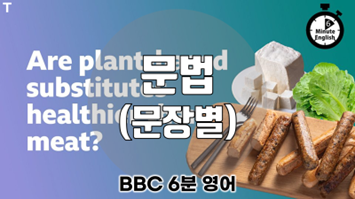
[본문] [04] If you've heard about Meat-Free Mondays or Veganuary, you probably know about a trend which an increasing number of people are trying - to reduce, or even stop, eating meat.
[설명] ⑴ trying 뒤의 대시는 강조하기 위해 《말하는 이》가 뭔가를 꾀하려고 쓴 것입니다.
⑵ 『which an increasing number of ~』의 which는 목적격 관계대명사입니다. 선행(명)사는 {a trend}입니다.
⑶ 『to reduce, or ~』는 to부정사 형용사적 쓰임법으로 관계사 which를 뒤에서 꾸며 줍니다(뒤 꾸밈〈後位 修飾〉).
[본문] [06] Instead, people are getting their daily amount of protein through plant-based alternatives - meat-free sausages and burgers made using ingredients like soy, tofu or fungi, as well as tempeh, beans or nuts.
[설명] ⑴ plant-based alternatives 대시(줄표)는 동격 관계를 나타냅니다. 「plant-based alternatives」와 「meat-free sausages and burgers」는 동격입니다. 대시가 '(관계)대명사+be동사'의 기능을 합니다.
⑵ 『made using ~』은 과거분사(구)로 'meat-free sausages and burgers'를 뒤에서 꾸며줍니다. 분사 앞에 '주격관계대명사와 be 동사'가 간추려져 빠져 있다고 생각할 수 있습니다.
⑶ 『like soy, tofu or fungi』는 전치사명사구로 형용사의 쓸모를 합니다. ingredients를 뒤에서 꾸며줍니다.
⑷ 『as well as tempeh, beans ~』 글짜임의 「as well as」는 ingredients와 'tempeh, beans or nuts'를 이어주는 상관접속사입니다.
[본문] [07] Have you tried any of these plant-based meat alternatives, Georgie?
[설명] 이 문장은 현재완료 시제(時制, tense) 글짜임입니다. 현재까지의 '경험'을 나타냅니다. '~라고 ~한 적이 있다'
★ try 먹어보다
[본문] [09] I have lots of vegetarian friends, so I've been to veggie barbecues, and have tried the plant-based sausages and burgers.
[설명] ⑴ 『I've been to veggie barbecues』의 「be 동사 to 목적지」는 '(목적지로)로 가다'의 뜻을 갖습니다.
⑵ 『I've been ~』, 『have tried 』는 현재완료 시제 글짜임입니다. 현재까지의 '경험'을 나타냅니다. '~라고 ~한 적이 있다'
[본문] [10] I quite like them as long as they're covered in sauce.
[설명] 「as long as」는 ~하는 한, ~하는 조건으로(~한다면)의 뜻의 종속 접속사입니다.
[본문] [11] What about you?
[설명] 『what about} ~』은 제안을 하거나 잊고 있던 것을 상기 시킬 때 씁니다. '~는 어때'의 뜻입니다.
[참조 링크]☞ How about? what aboout? 뜻 쉽게 비교
[본문] [12] Yeah, I think I agree.
Yeah, I think {that} I agree.
[설명] think 뒤에 명사절을 이끄는 접속사 that이 간추려졌습니다. that절의 문장성분은 목적어입니다.
[본문] [14] There's a reason for them, but I'm not sure they're as good as the real thing.
[설명] ⑴ 『I'm not sure ~』는 『be sure that ~」 글짜임에서 that이 간추려진 꼴입니다. 이 때 that절은 부사절로 앞의 형용사인 sure를 꾸입니다.
⑵ 『as good as the real thing』은 「as 형용사 as」 글짜임으로 동등 비교(원급 비교) 글짜임입니다.
[참조 링크]☞ as 형용사 as 비교구문 / 두 as의 차이점
[본문] [15] Now, with processed meat being linked to diseases like diabetes and cancer, most doctors agree that plant-based options are healthier.
[설명] 『with processed meat being ~』은 「with+목적어(명사)+서술어」의 틀을 갖는 「with 덧붙임 상황[附帶狀況]」 글짜임입니다. 목적어는 명사(구)인 'processed meat', 서술어는 'being linked ~'입니다.
[본문] [16] But some people are worried about how plant-based alternatives are made, including radio listener, Graham Glover, who asked this question to BBC Radio 4 programme, Sliced Bread:
[설명] ⑴ 『how plant-based alternatives are made』는 how 관계부사절입니다. '~하는 방식(법)'이라는 의미의 명사절로 전치사 about의 목적어입니다.
⑵ 『including radio listener ~』의 including은 분사에서 파생한 전치사입니다. 파생전치사 또는 분사형 전치사라고 합니다.
⑶ 「radio listener」와 「Graham Glover」가 동격입니다. 콤마가 동격을 나타냅니다.
⑷ 『who asked this ~』의 who는 한정용법 주격의 관계대명사입니다. 선행(명)사는 'radio listener'입니다.
[참조 링크]☞ 관계부사 how
[참조 링크]☞ 분사형전치사에 대하여
[참조 링크]☞ 분사의 확장: 분사형 명사, 분사형 부사, 분사형 전치사, 분사형 접속사
[본문] [17] Well, my question is - looking at these vegetable sausages, how they are processed, full of additives and flavourings and colourings - are they any healthier than a pork sausage?
[설명] ⑴ 삽입구문 안은 다른 공통된 주제를 다루기 위해 비격식적으로 다른 문장성분이나 문법요소를 나열(병렬)합니다. 구어체에서 생동감 있는 리듬을 보여 줍니다.
[본문] [18] In this episode, we'll be finding out whether plant-based foods really are a healthier alternative to meat.
[설명] 「whether ~」 절은 명사절로 전치사 out의 목적어입니다.
[본문] [22] Listener Graham loves eating sausages, but do you know which of the following words means 'sausages' in British English slang?
[설명] 『loves eating ~』은 「love V-ing」 글짜임으로 V-ing는 명사로 쓰여 동사 love의 목적어가 됩니다.
[참조 링크]☞ hate, like, love and prefer 동명사와 to부정사 쓸 때의 차이점
[본문] [25] So, I actually know the answer to this question, so I'm not going to say.
[설명] 「the answer to this question」의 [A to B] 관계에서 B는 A가 다가서려고 하는 대상이나 주제가 됩니다. 전치사 to의 기본 개념은 '방향'과 '도착(움직임)'입니다.
[본문] [26] Otherwise, it will spoil it for our listeners.
[설명] ⑴ 주어 it는 [상황의 it]입니다. 어떤 상황을 표현하는 문장에서 주어 it는 해석하지 않거나 앞의 상황 전체를 지시합니다.
⑵ 『~ spoil it for ~』의 대명사 it는 '정답(answer) 혹은 청취자의 기대/흥미'라는 뜻입니다. 이와 같이 대명사가 앞에 명시적으로 나온 명사(구)가 아니라 추론이 가능하거나 연결된 개념을 가리키는 쓰임법을 간접 참조(indirect reference)라고 합니다.
[본문] [29] Although most research agrees that plant-based foods are healthier than meat, it's also true that meat-free products are processed.
[설명] ⑴ 『plant-based foods are healthier than meat』는 우등 비교급 글짜임입니다. 비교 과녁은 명사(구)인 'plant-based foods'와 meat이고 비교 항목(낱말)은 형용사 healthier입니다.
⑵ 『it's also true that ~』은 that 명사절이 진짜주어인 「it 가짜주어」 글짜임입니다.
[본문] [31] Quorn, one of the best-known brands of meat-free products, uses mycoprotein, a fungi-based protein similar to the fungi used in the fermentation of yoghurt and bread.
[설명] ⑴ 「mycoprotein」과 「a fungi-based protein」이 동격입니다. 콤마가 동격을 나타냅니다.
⑵ 형용사구 「similar to ~」가 「a fungi-based protein」을 뒤에서 꾸며 줍니다. 관계대명사와 be 동사가 간추려져 빠져 있다고 보기도 합니다.
⑶ 『used in ~』은 과거분사(구)로 'the fungi'를 뒤에서 꾸며줍니다. 분사 앞에 '주격관계대명사와 be 동사'가 생략되어 있다고 생각할 수 있습니다.
[본문] [34] Graham, listening to all this, you know, normally a fan of a meat sausage - you're plant-based, meat-alternative sausage curious, that we're exploring today - what do you think about hearing about the sources of where they come from?
[설명] ⑴ 대시(줄표)는 동격 관계를 나타냅니다. 「a fan of a meat sausage」와 「you」는 동격입니다.
⑵ 『that we're exploring ~』의 that은 관계사로 계속용법으로 쓰이고 있습니다. 구어체에서 종종 which를 대신해 that을 쓰기도 하지만 문법적으로는 틀린 쓰임법입니다. that은 앞의 내용을 받습니다.
⑶ 「meat-alternative sausage curious」는 「명사+형용사」로 묶인 꼴을 가진 형용사입니다.
[본문] [35] What's your gut reaction to hearing that Quorn comes from a fungus?
[설명] ★ gut reaction 창자반응 =〉 직감적 반응
[본문] [40] Your gut reaction is your opinion based on your initial feeling or instinct about something.
[설명] 『based on ~』은 과거분사(구)로 'your opinion'을 뒤에서 꾸며줍니다. 분사 앞에 '주격관계대명사와 be 동사'가 생략되어 있다고 생각할 수 있습니다.
[본문] [42] Actually, Graham doesn't mind that his sausage protein is a fungus, as long as it's healthy.
[설명] 「as long as」는 ~하는 한, ~하는 조건으로(~한다면)의 뜻의 종속 접속사입니다.
[본문] [44] Of course, healthy eating is important, but there are other factors influencing whether meat lovers like Graham could be persuaded to try plant-based alternatives.
[설명] ⑴ 『influencing ~』은 현재분사 글짜임으로 'other factors'를 뒤에서 꾸며 줍니다. 분사 앞에 「주격관계대명사와 be 동사」가 간추려져 있다고 생각할 수 있습니다.
⑵ 「whether ~」 절은 명사절로 문장 성분은 목적어입니다.
[참조 링크]☞ whether 동격절
[본문] [45] These include things like the taste, colour and texture of the sausage - in other words, whether a plant-based sausage looks and feels like real meat.
[설명] 대시(줄표)는 동격 관계를 나타냅니다. 「the taste, colour and texture of the sausage」와 whether 절이 동격입니다. 대시가 '(관계)대명사+be동사'의 기능을 합니다.
[본문] [48] Because my mum is a long-time veggie, and we were talking about this, and she says, "I don't want my, you know, alternative proteins to resemble meat."
[설명] 『I don't want my ~』 문장은 「want+목적어+to부정사」 글짜임입니다. 이 글짜임은 (to) 부정사 'to resemble ~'이 목적어 'my alternative proteins'의 보충·어[補語, complement]가 되는 5형식 글틀을 만듭니다.
[본문] [49] That's one of the reasons she says she doesn't eat meat.
That's one of the reasons {which/that} she says {that} she doesn't eat meat.
[설명] ⑴ 선행(명)사 'one of the reasons' 뒤에 목적격 관계대명사 which 또는 that이 간추려져 빠져 있습니다.
⑵ 'she says' 뒤에 명사절을 이끄는 접속사 that이 간추려졌습니다. 종속절의 문장성분은 목적어입니다.
[본문] [50] But you, Graham, you said you do want your plant-based sausage to resemble a pork sausage.
But you, Graham, you said {that} you do want your plant-based sausage to resemble a pork sausage.
[설명] ⑴ 'you said' 뒤에 명사절을 이끄는 접속사 that이 간추려졌습니다. that절의 문장성분은 목적어입니다.
⑵ 『you do want your plant-based sausage to ~』는 「want+목적어+to부정사」 글짜임입니다. 이 글짜임은 (to) 부정사 'to resemble ~'이 목적어 'your plant-based sausage'의 보충·어[補語, complement]가 되는 5형식 글틀을 만듭니다.
[본문] [51] Yeah, I've always been a meat eater, but I do need a plant-based product to be similar in terms of flavour, texture, and appearance.
[설명] ⑴ 『I've always been a meat eater』는 현재-완료 시제-모습[현재 시제+완료 에스펙트(相)]입니다. 현재까지의 '계속되는 상황'을 나타냅니다.
⑵ 『~ do need a ~』의 동사의 원형 앞에 do, does, did를 붙이면 강조를 나타냅니다.
⑶ 「in terms of」는 in front of, on account of 따위와 같은 「전치사+명사+of」 틀로 이루어진 복합 전치사구입니다.
[본문] [52] Graham wants his plant-based sausages to resemble, meaning look similar to, meat.
[설명] 분사구문 『meaning ~』은 계속용법의 관계사절을 분사구문으로 줄여 쓴 것입니다. 원래 문장은 『which means ~』 입니다.
[본문] [53] But that's not the case for Greg's mum, who's a long-time veggie.
[설명] 『who's a long-time ~』의 who는 계속용법의 주격 관계대명사입니다. 선행(명)사는 'Greg's mum'입니다. "and she"의 뜻입니다.
[본문] [54] A veggie is slang for a vegetarian, a person who doesn't eat meat.
[설명] ⑴ 「a vegetarian」과 「a person ~」이 동격입니다. 콤마가 동격을 나타냅니다.
⑵ 『who doesn't eat ~』의 who는 제한적용법 주격의 관계대명사입니다. 선행사는 'a person'입니다.
[본문] [55] And the adjective long-time describes someone who has been or done a particular thing for many years.
[설명] 『who has been or ~』의 who는 한정용법 주격의 관계대명사입니다. 선행(명)사는 someone입니다.
[본문] [56] So, a long-time veggie is someone who's been vegetarian for many years.
[설명] 『who's been ~』의 who는 한정용법 주격의 관계대명사입니다. 선행(명)사는 someone입니다.
[본문] [57] Whether you want your veggie sausages to look, taste and feel like meat, or you prefer your protein from a plant, now there's every chance you'll find what you're looking for…
Whether you want your veggie sausages to look, taste and feel like meat, or you prefer your protein from a plant, now there's every chance {which/that} you'll find what you're looking for…
[설명] ⑴ 접속사 「whether (or not)」은 양보의 부사절을 이끌고 있습니다.
⑵ 선행(명)사 'every chance' 뒤에 목적격 관계대명사 which 또는 that이 간추려져 빠져 있습니다.
[본문] [63] And we have a typical dish in the UK called bangers and mash, which is sausages and mash.
[설명] ⑴ 『called bangers ~』는 과거분사(구)로 'a typical dish'를 뒤에서 꾸며줍니다. 분사 앞에 '주격관계대명사와 be 동사'가 생략되어 있다고 생각할 수 있습니다.
⑵ 『which is sausages ~』 글짜임의 which는 관계대명사의 계속적 쓰임법으로 격은 주격입니다. 선행(명)사는 'bangers and mash'입니다.
[본문] [70] A veggie is slang for a vegetarian - someone who doesn't eat meat.
[설명] ⑴ 대시(줄표)는 동격 관계를 나타냅니다. 「a vegetarian」과 「someone」은 동격입니다. 대시가 '(관계)대명사+be동사'의 기능을 합니다.
⑵ 『who doesn't ~』의 who는 한정용법 주격의 관계대명사입니다. 선행(명)사는 someone입니다.
pdf 파일은 이곳을 클릭하세요.
https://softca.tistory.com/3223을 클릭하세요.
이 블로그에는 [BBC 6분 영어와 관련하여 매주 다음과 같은 글들이 게시 됩니다
- 단어공부(금주 대본에 나온 주요 어휘) https://wordstudy.tistory.com/1354
- 멀티단어공부(금주 대본에 사용된 멀티단어(구동사, 숙어) 간단 정리) https://softca.tistory.com/3224
- 독해공부(금주 대본의 문장별 해석(직역) 자료) https://softca.tistory.com/3225
- 문장별 문법공부(문장별 문법 설명) 이 글입니다
- 금주의 어휘(금주 대본에 나온 금주의 어휘를 집중적으로 정리한 자료) 이 글의 포스팅 시점에는 아직 작성되지 않았습니다.
- 항목별 문법공부(금주 대본에 나온 문법을 주제별/항목별로 정리한 자료) 이 글의 포스팅 시점에는 아직 작성되지 않았습니다.
- 금주의 구동사(금주 대본에 사용된 구동사 상세 정리) 이 글의 포스팅 시점에는 아직 작성되지 않았습니다.
- 금주의 PDF(금주의 PDF 및 기타 다운로드 파일) https://softca.tistory.com/3223

아래의 이미지를 클릭하시면 PDF로 된 대본(Script)를 다운받을 수 있습니다.
[영어 문장 공부] 자료를 처음 보시는 분은 아래의 링크를 클릭하셔서 「공부법」을 먼저 보시기를 권장 드립니다.
[영어문장공부] 학습법 보기


