
당신은 부엌에서 어떤 식용유(食用油)를 쓰려는 성향을 보입니까? 몇몇 사람들은 실제로 다른 사람들보다 좀더 건강합니까? 아니면 그것이 단지 기업들이 당신에게 보다 더 비싼 제품을 사도록 만드는 방법입니까? 닐과 죠지는 이것들을 논의합니다. 그리고 당신에게 몇몇의 새로운 어휘를 가르칩니다.
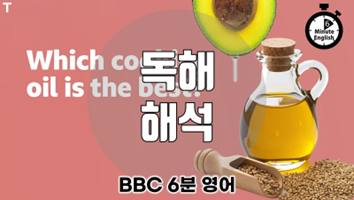
Which cooking oil do you tend to use in the kitchen? Are some really more healthy than others, or is it just a way for companies to make you buy more expensive products? Neil and Georgie discuss this and teach you some new vocabulary.
이 자료는 BBC Learning English 코너의 6 Minute English가 매주 재공하는 스크립트를 직역한 것입니다. 이번 주 스크립트의 주제는 'Which cooking oil is the best?' 입니다.
해석은 철저하게 직역하였습니다. 관계사절 등의 절이나 긴 부정사, 동명사구, 삽입구 등은 이해를 위해 []를 사용해 묶었습니다. 이 글의 목적은 번역이 아니라 원문을 영어적으로 이해하는 것이기 때문입니다.
[본문] [01] Hello and welcome to 6 Minute English from BBC Learning English.
[직역] 안녕(하세요) 그리고 BBC 학습영어의 6분 영어에 오신 것을 환영합니다.
[본문] [02] I'm Georgie.
[직역] 나는 죠지입니다.
[본문] [03] And I'm Neil.
[직역] 그리고 나는 닐입니다
[본문] [04] Georgie, today we're talking about cooking oils and which products are best for our health.
[직역] 죠지, 오늘 우리는 식용유(食用油)에 대해 이야기할 것입니다. 그리고 어떤 제품이 우리 건강에 가장 좋습니까?
[본문] [05] What do you use to cook with?
[직역] 당신은 〈무엇으로 요리하는 것〉을 사용합니까?
[본문] [06] Olive oil?
[직역] 올리브 오일.
[본문] [07] Butter?
[직역] 버터.
[본문] [08] Maybe avocado oil?
[직역] 어쩌면 아보카도 오일.
[본문] [09] Hmm, when I want my food to be rich and creamy, I use butter, but usually for everyday meals I just use olive oil.
[직역] 흠, 내가 나의 음식이 풍부하고 크림이 많이 있게 되기를 바라면, 나는 버터를 사용합니다. 그러나 보통 일상적인 식사에, 나는 단지 올리브 오일을 사용합니다.
[본문] [10] What about you?
[직역] 당신은 어떡합니까?
[본문] [11] Yes, it varies, but I guess for East Asian food, I might sometimes use sesame oil.
[직역] 맞아요 그것은 서로 다릅니다. 그런데 나는 [동아시아의 음식용으로 나는 때때로 참깨 기름을 사용할 수도 있다] (라고) 추측합니다.
[본문] [12] Now, there are so many different oils we can use for our food, and some of them are very expensive and claim to have big health benefits.
Now, there are so many different oils {which/that} we can use for our food, and some of them are very expensive and claim to have big health benefits.
[직역] 이제 우리가 [우리의 음식에 쓸 수 있는] 대단히 많은 각각 다른 기름이 있습니다. 그리고 몇몇의 그들은 매우 비싸지만, 커다란 건강상의 이익을 갖는다고 주장합니다
[본문] [13] Today we'll be finding out whether these products are worth the money and can really help us eat more healthily.
[직역] 오늘 우리는 〔이들 제품들이 돈 가치가 있는지]와 그리고 [실제로 우리가 보다 더 건강하게 먹도록 도울 수 있는지〕를 알아낼 것입니다.
[본문] [14] Yes, and don't forget to go to our website for a transcript of this programme to read along, and a worksheet to test what you've learned.
Yes, and don't forget to go to our website for ①a transcript of this programme to read along, and ②a worksheet to test what you've learned.
[직역] 맞아(요) 그리고 함께 읽기 위한 이 프로그램의 원고와 그리고 [당신이 배워 온 것]을 테스트하기 위한 연습 문제지를 얻기 위해 우리의 웹사이트에 가는 것을 잊지 마시십시오.
[본문] [15] Visit bbclearningenglish.com.
[직역] bbclearningenglishcom을 방문하십시오.
[본문] [16] Georgie, let's start with a question.
[직역] 죠지 질문으로 시작합시다.
[본문] [17] In the UK, a popular oil to cook with is olive oil, but which country produces the most olive oil?
[직역] 영국에서 조리하는 인기 있는 기름은 올리브유입니다. 그러나 어떤 나라가 가장 많은 올리브 기름을 생산합니까?
[본문] [18] Is it:
[직역] 이것입니다.
[본문] [19] a) Italy b) Greece c) Spain
[직역] ⒜ 이탈리아 ⒝ 그리스 ⒞ 스페인
[본문] [20] Ooh, that's difficult.
[직역] 오오, 어렵습니다.
[본문] [21] I know that Spain produces a lot, but I think I'm going to go with Italy.
I know that Spain produces a lot, but I think {that} I'm going to go with Italy.
[직역] 나는 [스페인이 많이 생산한다] 라는 것을 압니다. 그러나 나는 [내가 이탈리아를 받아들이려고] 생각합니다.
[본문] [22] OK.
[직역] 오케이
[본문] [23] Well, we'll find out if that's the right answer at the end of the programme.
[직역] 그래요 우리는 프로그램의 끝 무렵에 [그것이 정답인지]를 알아낼 것입니다.
[본문] [24] Now, lots of us are careful about the amount of fat we eat.
Now, lots of us are careful about the amount of fat {which/that} we eat.
[직역] 이제 우리 중 대부분은 [우리가 먹는] 지방의 량(量)에 주의합니다.
[본문] [25] We might avoid fast food and treats like chocolate or cake, but lots of the fat we eat comes from the oils we use to cook with.
[직역] 우리는 패스트푸드와 〈초콜릿이나 케이크와 같은 대접〉을 피할 수도 있습니다. 그러나 [우리가 먹는] 지방의 많은 부분은 [요리하려고 우리가 사용하는] 기름에서 나옵니다.
[본문] [26] Yes, and some expensive oils claim to contain other vitamins that are good for us.
[직역] 맞아요 그리고 몇몇의 비싼 기름은 [우리에게 알맞는] 다른 비타민이 들어 있다고 주장합니다.
[본문] [27] But are these claims true?
[직역] 그러나 이러한 주장들이 사실입니까?
[본문] [28] It can be confusing.
[직역] 그것은 혼란스러울 수 있습니다.
[본문] [29] Presenter of BBC Radio 4 programme Sliced Bread, Greg Foot, has lots of emails about the problem.
[직역] 비비씨라디오4 프로그램 Sliced Bread의 진행자인 Greg Foot는 문제에 관해 많은 이메일을 받습니다.
[본문] [30] I'll tell you what, Sarah - we have had an absolute wok-load of emails sent to sliced.bread@bbc.co.uk asking about cooking oils.
[직역] 나는 당신에게 무언가를 알리려고 하는데, Sarah, 우리는 식용유(食用油)에 관해 질문하는 slicedbread@bbc.co.uk으로 발송된 절대적으로 많은 이메일을 받아오고 있습니다
[본문] [31] Listener Alastair in Midlothian wrote that: For years we were told to cook with polyunsaturated oils like sunflower oil.
[직역] Midlothian에 사는 청취자 Alastair는 이것을 썼습니다. 수년간 우리는 해바라기 기름과 같은 고도 불포화의 기름으로 조리되는 것을 들었습니다.
[본문] [32] But now all the YouTube doctor experts are telling us seed oils are harmful.
But now all the YouTube doctor experts are telling us {that} seed oils are harmful.
[직역] 그러나 이제 모든 유튜브 의사 전문가들은 우리에게 [씨앗 기름이 해롭다] (라는 것을) 알리고 있습니다.
[본문] [33] They advocate consuming extra-virgin olive oil, but as I understand it that's not suitable for frying a fish.
[직역] 그들은 엑스트라 버진(의) 올리브유 마시는 것을 지지합니다. 그러나 내가 그것을 이해하듯이 그것은 생선을 굽는 것에는 적합하지 않습니다.
[본문] [34] Also, I hear that over a certain temperature olive oil turns harmful.
[직역] 또한 나는 [올리브유는 어떤 온도가 넘어서면 해롭게 바뀐다] 라는 것을 듣습니다.
[본문] [35] What the heck do I use for frying and roasting?
[직역] 에라 모르겠습니다! 내가 튀기고 굽기에 사용할까요?
[본문] [36] Greg says that he has received a wok-load of emails.
[직역] Greg는 [그가 많은 이메일을 받았다] 라는 것을 말합니다.
[본문] [37] A load of something is a lot of something.
[직역] 무언가의 'a load of'는 무언가의 'a lot of'입니다
[본문] [38] You'll also commonly hear the expressions shed-load or truck-load.
[직역] 당신은 또한 흔히 shed-load나 truck-load와 같은 표현을 들을 것입니다.
[본문] [39] These are used to emphasise how much of something there is.
[직역] 이것들은 [무언가가 얼마나 많이 있다] (라는 것을) 강조하는 데 이용합니다.
[본문] [40] Yes, and Greg uses wok-load as a fun expression, because he's talking about cooking oils and a wok is a kind of pan.
[직역] 맞아요 그리고 Greg는 wok-load를 재미있는 표현으로 사용합니다. 왜냐하면 그는 식용유(食用油)에 대해 이야기하고 (그리고) 웍은 일종의 (프라이)팬입니다.
[본문] [41] Greg reads one of the emails from a confused listener, Alastair, who says that he's watched YouTube videos that argue that oils like sunflower oil are bad for you.
[직역] Greg는 혼란스러워 하는 청취자인 Alastair로부터 온 이메일 중의 하나를 읽습니다. 그런데 그는 [그가 [[해바라기 기름과 같은 기름은 당신에게 안 좋다] 라는 것을 주장하는] 유뷰브 비디오를 지켜보아 왔다] 라는 것을 말합니다.
[본문] [42] These videos advocate using extra-virgin olive oil.
[직역] 이들 비디오들은 엑스트라 버진 올리브 오일을 쓰는 것을 지지합니다
[본문] [43] If you advocate something, you encourage people to use it.
[직역] 만약 당신이 무언가를 advocate 하면, 당신은 사람들에게 그것을 쓰도록 부추깁니다.
[본문] [44] But Alastair has also heard bad things about olive oil, and that you can't use it at high temperatures.
But Alastair has also heard ①bad things about olive oil, and ②that you can't use it at high temperatures.
[직역] 그러나 Alastair는 또한 〈올리브유에 관해 안 좋은 생각〉과 [당신이 그것을 높은 온도에서 사용할 수 없다] 라는 것을 들었습니다.
[본문] [45] He asks, what the heck can he use for roasting and frying?
[직역] 그는 [도대체 어떻게 그가 굽고 튀기는 것을 위해 사용할 수 있는지]를 물었습니다.
[본문] [46] What the heck is an informal phrase we can use to express frustration or surprise.
[직역] 'what the heck'은 [우리가 불만 또는 놀라움을 나타내려고 사용할 수 있는] 비격식적인 구입니다.
[본문] [47] It does seem like there's a lot of advice about cooking oils and that not everyone agrees.
[직역] [〈식용유(食用油)에 관한 많은 도움되는 말〉과 그리고 [모든 사람이 동의하는 것은 아니다] 라는 것이 있는 것]처럼 보입니다.
[본문] [48] Yes, and some of the advice is to use very expensive options such as coconut oil and avocado oil.
[직역] 맞아요, 그리고 일부 도움주는 말은 예를 들어 코코넛 열매 기름과 아보카도 기름과 같은 매우 비싼 옵션을 사용하는 것입니다
[본문] [49] People who advocate using these oils say they are wonder products.
People who advocate using these oils say {that} they are wonder products.
[직역] 이러한 기름을 사용할 것은 지지하는 사람들을 [그것들이 놀라운 제품이다] (라고) 말합니다
[본문] [50] A wonder product is an item, usually a food or medicine, that is very effective or beneficial for people.
[직역] 'wonder product'란 보통 식품이나 약품인데, 사람들에게 매우 효과적이거나 유익한 물품입니다.
[본문] [51] But not everyone is convinced that expensive cooking oils are worth the money.
[직역] 그러나 모든 사람이 [비싼 식용유(食用油)가 돈의 가치를 한다] 라는 것을 납득시키는 것은 아닙니다.
[본문] [52] Nita Forouhi is professor of population health and nutrition at the University of Cambridge and she talked to BBC Radio 4's Sliced Bread host, Greg Foot, about expensive cooking oils like avocado oil.
[직역] Nita Forouhi는 Cambridge 대학교의 주민 건강 및 영양학과 교수입니다. 그리고 그녀는 BBC 라디오 4 방송국 Sliced Bread 진행자인 Greg Foot와 아보카도 오일과 같은 비싼 식용유(食用油)에 관해 이야기를 나누었습니다.
[본문] [53] What do you think, Nita?
[직역] Nita 어떻게 생각하십니까?
[본문] [54] What might justify the price tag?
[직역] 무엇이 가격표의 타당함을 보여 줄까요?
[본문] [55] Certainly, avocado oil is good for all the reasons mentioned, but is it worth justifying the cost?
[직역] 틀림없이, 아보카도 기름이 언급된 모든 이유에 알맞습니다. 그런데 그것이 가격의 타당함을 보여 줄 가치가 있습니까?
[본문] [56] If you're a particular connoisseur of the taste it brings, and you prefer it and you have the money, then knock yourself out.
[직역] 만약 당신이 그것이 가져온 맛의 특별한 감정가이면, 그리고 당신이 그것을 선호하고 당신이 돈이 있으면 그러면 마음껏 즐기세요.
[본문] [57] But there's lots of myths about these super foods and wonder oils and wonder this and that.
[직역] 그러나 이러한 슈퍼 식품과 원더 오일 그리고 놀라운 이것저것에 관한 수많은 신화가 있습니다.
[본문] [58] And it's just all, I'm afraid, hogwash.
[직역] 그리고 나는 [그것은 단지 모두 시시한 것이다] (라는 것을) 우려합니다.
[본문] [59] Nita says that avocado oil does have some health benefits, but she's not sure they are worth the cost of a bottle.
Nita says that avocado oil does have some health benefits, but she's not sure {that} they are worth the cost of a bottle.
[직역] Nita가 [아보카도 오일은 몇몇의 건강상의 이익을 갖고 있다] 라는 것을 말합니다. 그러나 그녀는 [그것들이 한 병의 값의 가치가 있다] (라고) 확신하지 않습니다.
[본문] [60] She says if you like the taste and are happy to spend the money then 'knock yourself out'.
She says {that} if you like the taste and are happy to spend the money then 'knock yourself out'.
[직역] 그녀는 [만약 당신이 그 맛을 좋아하고 돈을 쓰는 것이 행복하면, 그러면 knock yourself out 라고] 말합니다.
[본문] [61] The expression knock yourself out means go ahead.
[직역] 'knock yourself out' 라는 표현은 'go ahead' 라는 의미입니다.
[본문] [62] But Nita is also concerned about all the health claims about expensive wonder products like avocado oil.
[직역] 그러나 Nita는 또한 아보카도 오일과 같은 비싸고 경이로운 제품에 관한 모든 건강 주장을 우려합니다.
[본문] [63] She says that many claims are hogwash: they are nonsense, and products are not worth spending money on.
[직역] 그녀는 [많은 주장들이 시시한 것이다] 라는 것을 말합니다. 그것들은 터무니없는 생각입니다. 그리고 제품들은 돈을 쓸 가치가 없습니다.
[본문] [64] OK.
[직역] 오케이
[본문] [65] Maybe I'll stick to my olive oil then.
[직역] 아마도 그러면 나는 나의 올리브유를 고수하겠습니다.
[본문] [66] And that reminds me of your question, Neil.
[직역] 그리고 닐 그것이 나에게 당신의 질문을 기억나게 합니다.
[본문] [67] Yes, I asked you which country produces the most olive oil.
[직역] 맞아요 나는 당신에게 [어떤 나라가 가장 많은 올리브유를 생산한다] (라는 것을) 물었습니다.
[본문] [68] And I said Italy.
[직역] 그리고 나는 이탈리아를 말했습니다.
[본문] [69] And I'm afraid you are wrong.
And I'm afraid {that} you are wrong.
[직역] 그리고 나는 [당신이 틀렸다] (라고) 걱정합니다.
[본문] [70] No!
[직역] 아니(요)
[본문] [71] It is in fact Spain.
[직역] 그것은 사실 스페인입니다.
[본문] [72] OK.
[직역] 오케이
[본문] [73] Let's recap the vocabulary we've learned in this programme, starting with a load of something, which means a lot of something.
[직역] 무언가의 'a load of'로 시작하면서, 우리가 이 프로그램에서 배워온 낱말들을 살펴봅시다. 그리고 그것은 무언가의 'a lot of' 라는 의미입니다.
[본문] [74] We also commonly hear shed-load and truck-load.
[직역] 우리는 또한 흔히 shed-load와 truck-load (라는 말을) 듣습니다.
[본문] [75] If you advocate something, you encourage people to use it or do it.
[직역] 만약 당신이 무언가를 advocate 하면, 당신은 사람들이 그것을 사용하거나 또는 그것을 하는 것을 부추깁니다.
[본문] [76] The expression what the heck is used to express frustration or surprise.
[직역] 'what the heck'이라는 표현은 불만이나 놀라움을 나타내는 데 이용합니다.
[본문] [77] A wonder product is something that people think is very effective or beneficial.
A wonder product is {that} something {which/that} that people think is very effective or beneficial.
[직역] 'wonder product'는 [[사람들이 생각하는] 무언가가 매우 효과적이거나 유익하다] 라는 것입니다.
[본문] [78] The expression knock yourself out means go ahead.
[직역] 'knock yourself out' 라는 표현은 'go ahead' 라는 의미입니다.
[본문] [79] And if something is described as hogwash, it's nonsense or not true.
[직역] 그리고 만약 무언가가 hogwash 라고 풀어 말하면, 그것은 무의미하거나 사실이 아닙니다.
[본문] [80] Once again, our six minutes are up.
[직역] 한 번 한 번 더 우리의 6분 영어가 끝났습니다
[본문] [81] Try the free interactive quiz on our website to test the vocabulary you've learned.
[직역] [당신이 배워 온] 어휘를 테스트하기 위해 우리의 웹사이트에 있는 무료의 대화형(의) 퀴즈를 시도해 보십시오.
[본문] [82] Visit bbclearningenglish.com.
[직역] bbclearningenglishcom를 방문하십시오.
[본문] [83] Goodbye for now!
[직역] 이제 안녕
[본문] [84] Which cooking oil do you tend to use in the kitchen?
[직역] 당신은 부엌에서 어떤 식용유(食用油)를 쓰려는 성향을 보입니까?
[본문] [85] Are some really more healthy than others, or is it just a way for companies to make you buy more expensive products?
[직역] 몇몇 사람들은 실제로 다른 사람들보다 좀더 건강합니까? 아니면 그것이 단지 기업들이 당신에게 보다 더 비싼 제품을 사도록 만드는 방법입니까?
[본문] [86] Neil and Georgie discuss this and teach you some new vocabulary.
[직역] 닐과 죠지는 이것들을 논의합니다. 그리고 당신에게 몇몇의 새로운 어휘를 가르칩니다.
pdf 파일은 이곳을 클릭하세요.
https://softca.tistory.com/3181을 클릭하세요.
이 블로그에는 [BBC 6분 영어와 관련하여 매주 다음과 같은 글들이 게시 됩니다
- 단어공부(금주 대본에 나온 주요 어휘) https://wordstudy.tistory.com/1294
- 멀티단어공부(금주 대본에 사용된 멀티단어(구동사, 숙어) 간단 정리) https://softca.tistory.com/3182
- 독해공부(금주 대본의 문장별 해석(직역) 자료) 이 글입니다
- 문장별 문법공부(문장별 문법 설명) 이 글의 포스팅 시점에는 아직 작성되지 않았습니다.
- 금주의 어휘(금주 대본에 나온 금주의 어휘를 집중적으로 정리한 자료) 이 글의 포스팅 시점에는 아직 작성되지 않았습니다.
- 항목별 문법공부(금주 대본에 나온 문법을 주제별/항목별로 정리한 자료) 이 글의 포스팅 시점에는 아직 작성되지 않았습니다.
- 금주의 구동사(금주 대본에 사용된 구동사 상세 정리) 이 글의 포스팅 시점에는 아직 작성되지 않았습니다.
- 금주의 PDF(금주의 PDF 및 기타 다운로드 파일) https://softca.tistory.com/3181

아래의 이미지를 클릭하시면 PDF로 된 대본(Script)를 다운받을 수 있습니다.
[영어 문장 공부] 자료를 처음 보시는 분은 아래의 링크를 클릭하셔서 「공부법」을 먼저 보시기를 권장 드립니다.
[영어문장공부] 학습법 보기


